
A Simple Guide to Living & Nonliving Nature Study for Children
Spring is the perfect time to slow down, step outside, and begin noticing the world around us. A living and nonliving nature study is one of the best ways to introduce young children to early science through hands-on, meaningful learning.
This simple concept helps children make sense of nature while building observation, critical thinking, and classification skills—all through outdoor exploration.
What Are Living and Nonliving Things?
A living thing is something that:
Grows and changes
Needs food, water, and air
Can reproduce
Responds to its environment
Examples include plants, animals, insects, trees, and flowers.
A nonliving thing does not have these needs or abilities. Examples include rocks, water, soil, sticks, and shells.
💡 You can also introduce “once living” items like leaves, feathers, or wood—an important concept in early childhood science.
Why Living and Nonliving Is Important for Kids
Understanding living and nonliving things for kids is a foundational step in learning about science and the natural world. It helps children:
Build early classification skills
Strengthen observation and critical thinking
Develop a deeper connection to nature
Prepare for learning about plants, animals, habitats, and ecosystems
This is the beginning of life science for kids and creates a strong base for future learning.
Hands-On Nature Study Ideas
One of the best parts of a nature-based learning approach is that it can happen anywhere—your backyard, a park, or even on a walk.
Try this simple living and nonliving activity for kids:
Go on a nature walk
Collect a few items
Sort them into living, nonliving, and once living
Ask guiding questions like:
“Does it grow?”
“Does it need water?”
“Was it ever alive?”
This encourages curiosity and deeper thinking through hands-on science activities.
Connecting Math, Literacy, and Science — A Holistic Approach to Learning.
A living and nonliving unit study naturally integrates multiple subjects:
Math: sorting, counting, measuring, comparing
Literacy: vocabulary, describing, early reading
Science: observation, life cycles, ecosystems
This is what makes Montessori science and nature-based homeschool curriculum so powerful—learning is connected and meaningful.
A Simple, Meaningful Way to Learn
At Little Farm Nature and Montessori School a, we believe in simple, hands-on learning that connects children to the natural world.
A living and nonliving nature study helps children slow down, observe, and truly understand the world around them—not just memorize it.
Explore More
If you’re looking for a living and nonliving printable unit or a nature study curriculum for kids, our Living & Nonliving Unit Study is designed to help you bring learning outdoors in a simple, meaningful way—wherever you are.
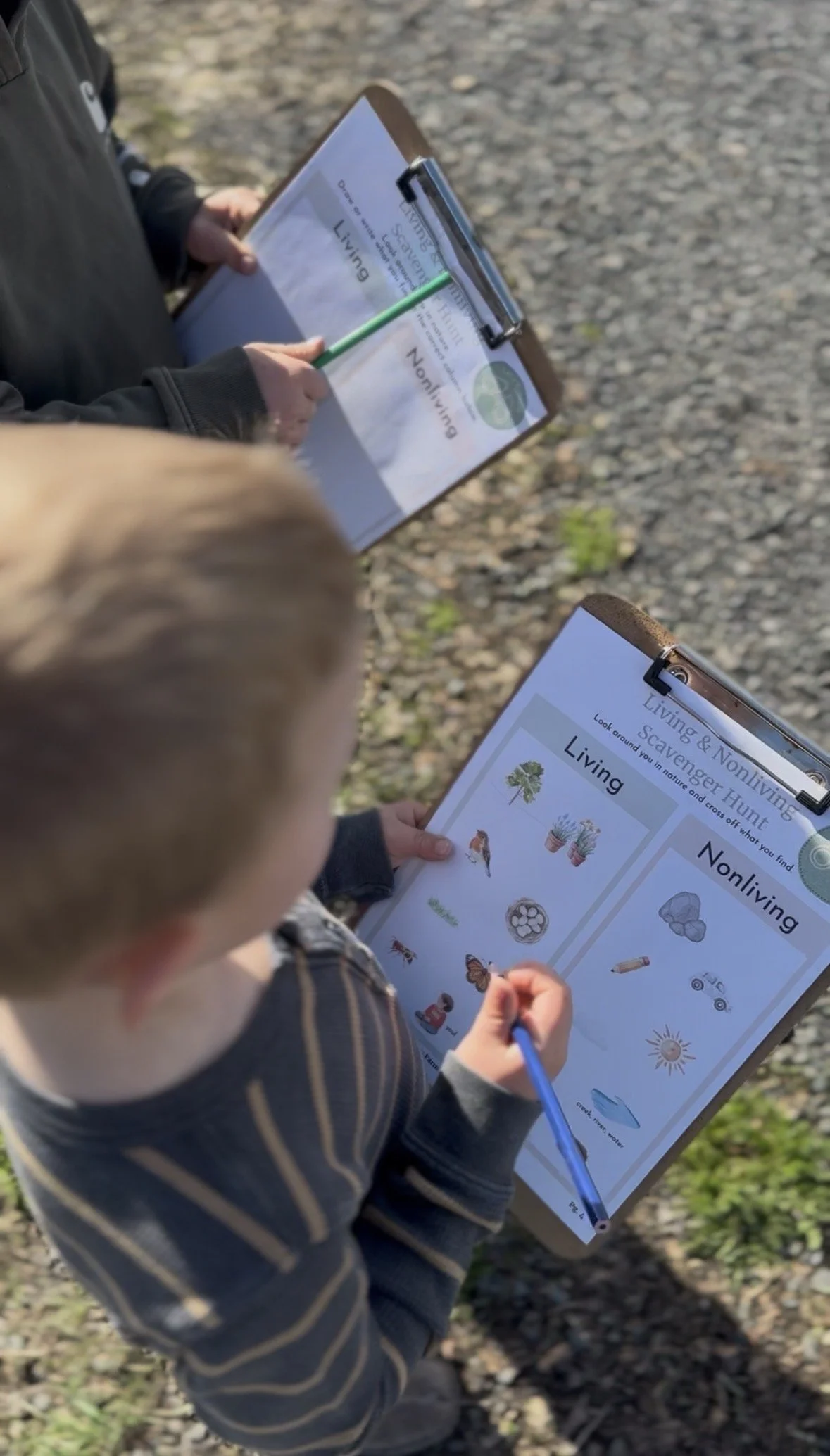
Help your child build a strong foundation in early science with this hands-on Living & Nonliving Unit. Through engaging activities, sorting work, and real-world observation, children begin to understand how the natural world is organized. Great for around ages 3 - 2nd Grade.
What’s Included:
My Living Things Checklist
Living & Nonliving Scavenger Hunt
Living & Nonliving Scavenger Hunt (ages 4+)
Living & Nonliving Sort
Living, Nonliving & Once Living Sort (ages 4+)
Nature Treasure Hunt & Sort
Living & Nonliving Measurement (ages 4+)
Living & Nonliving CVC Word Slap (early readers)
Living & Nonliving Sentence Strips (advanced readers)
Living & Nonliving Experiments
Book Recommendations
Further Discussion & Research Prompts